
From Deficiency to Capacity
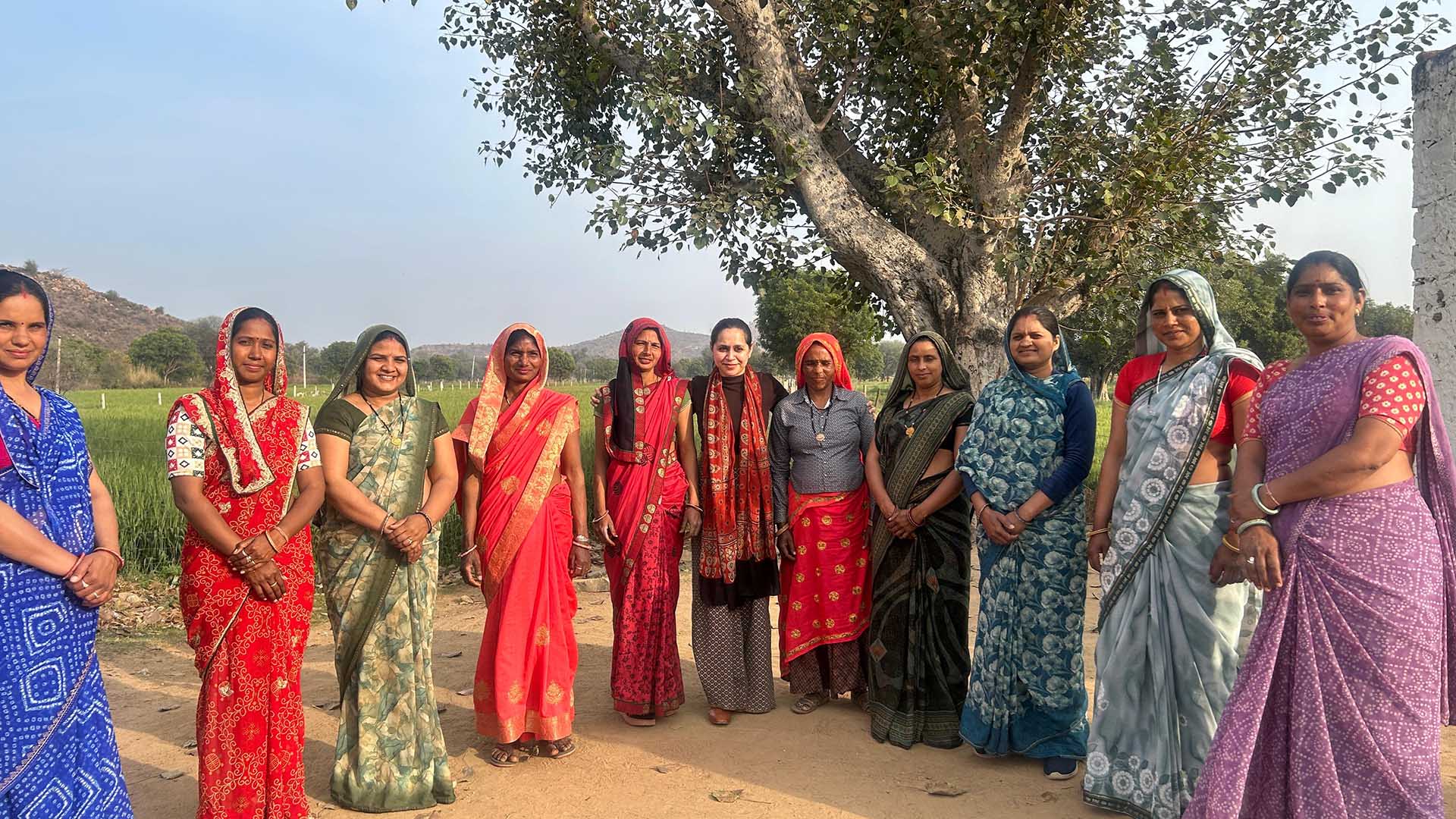
As India dreams of a Viksit Bharat, the fight against anaemia is becoming a story of hope—powered by government resolve and women’s collective strength
When Meera pauses midway while drawing water from the handpump in a village in Jharkhand, no one asks why. Her breathlessness is familiar. Her constant tiredness, invisible. Like millions of Indian women, Meera has learned to wear exhaustion quietly, calling it destiny or simply being a woman.
But India is changing. And so is this story.
A Nation That Refused to Look Away
For a long time, anaemia lived in the footnotes of India’s development journey—measured in haemoglobin levels, reported in surveys, discussed in review meetings. Yet behind every statistic was a woman carrying the weight of families, fields, factories, and futures—often with a depleted body and unacknowledged pain. Despite decades of efforts, more than half of India’s women of reproductive age still live with anaemia.
Recognising this, the Government of India made a decisive shift. With initiatives like Anaemia Mukt Bharat, anaemia was no longer treated as just a medical condition, but as a national priority—one linked to productivity, learning outcomes, maternal survival, and the dream of a strong, resilient nation. This acknowledgement was powerful: a country cannot become ‘Viksit’ if its women remain tired, weak, and unheard.
When Policy Meets Real Life
Meera remembers receiving iron tablets during her pregnancy. She took them diligently at first. Then the nausea began. No one explained why it happened, or how to manage it. Food was scarce, water unsafe, and her workload relentless. Gradually, the tablets stopped. The fatigue stayed.
Her experience reminds us of a critical truth: women do not reject care—they struggle to sustain it in unequal conditions.
India’s evolving anaemia response reflects this learning. Today, the focus extends beyond supplementation to behaviour change, diet diversity, infection control, sanitation, and continuity of care across the life cycle. Anaemia is no longer seen as a failure of individuals, but as a reflection of lived realities.
Where Hope Sits in a Circle
Once a month, Meera sits in a Self-Help Group (SHG) meeting. What began as a space for savings has transformed into a safe space, where women can share and learn from each other. Conversations that go beyond their livelihoods to overall wellbeing.
“Is it normal to feel dizzy all the time?” one woman asks.
“No,” another replies quietly. “We were told it isn’t.”
In that circle, anaemia stops being a diagnosis and becomes a shared experience.
SHGs are emerging as quiet but powerful allies in India’s fight against anaemia. Supported by government livelihoods missions and aligned with health and nutrition efforts, SHGs create spaces where information feels safe, where questions are encouraged, and where women begin—often for the first time—to prioritise their own health.
They talk about iron-rich local foods, about taking tablets with meals, about spacing pregnancies, about rest. They motivate one another to access services, to complete courses of supplementation, and to stop normalising constant exhaustion.
This is convergence that women can feel.
Government Effort, Community Energy
India’s anaemia journey today is not only a story of gaps—it is a story of intent meeting innovation.
From strengthened frontline systems to life-cycle-based strategies, from adolescent programmes to maternal care, the government’s efforts are laying a strong foundation. What makes this moment hopeful is the growing recognition that community platforms—especially women’s collectives—are not peripheral, but pivotal.
Across India, partners working alongside government are learning that when women’s platforms are trusted, systems perform better. When livelihoods improve dietary diversity, when sanitation reduces infections, and when SHGs reinforce public health messages, anaemia begins to loosen its grip.
Progress may be uneven—but it is real.
The Heart of Viksit Bharat
A Viksit Bharat will not be built by infrastructure alone. It will be built when women wake up with energy instead of exhaustion. When adolescent girls attend school without weakness. When motherhood is no longer accompanied by silent depletion.
Ending anaemia is not just a health goal—it is a moral and economic imperative.
Meera still works hard. Her life has not suddenly become easy. But she understands her body better now. She eats differently when she can. She completes her iron course. She tells other women not to ignore their tiredness.
That shift—from silence to shared resolve—is where India’s anaemia story finds its hope. The path ahead is clear: deepen convergence, invest in women’s platforms, and keep listening.
If India stays the course by combining government leadership with women’s collective power, the dream of an anaemia-free, Viksit Bharat will no longer be aspirational. It will be inevitable.
The author is Dr. Preeti Khanna, Manager, Intersectoral Convergence Health & Nutrition, at PCI India