
The Power of Small Decisions
Women, Health, and Change from the Ground Up
After years of experience in community engagement, especially with rural women in Bihar, I have learned that behaviour change is less about information and more about agency, context, and trust. One undeniable truth is: the most effective solutions are not designed by creating emotions or crafting persuasive messages, they emerge when we slow down enough to live people’s realities, to understand emotions as they are felt—not as we imagine them—and to work with communities as partners rather than as beneficiaries.
In my recent interactions with rural women of different age groups, between 25 and 65 years, I learnt that they are going through multiple health issues, including persistent body aches, frequent dizziness, menstrual disorders, and several other genitourinary issues, which they usually ignore until the condition becomes serious. On deep diving into the reasons for ignoring their own health, it became evident that women consistently prioritise family responsibilities over personal well-being, normalising persistent discomfort until it disrupts daily functioning. Limited trusted spaces to openly discuss gynaecological or genitourinary concerns, combined with fear of costly treatments or major interventions such as surgery, further suppresses timely care-seeking.
Evidence
Shifting this behaviour required more than just messaging; it required strengthening women’s agency to prioritise their health, building trust, creating safe spaces for open conversations and enabling a simple, first action-seeking care from a health functionary, even when symptoms appear minor.
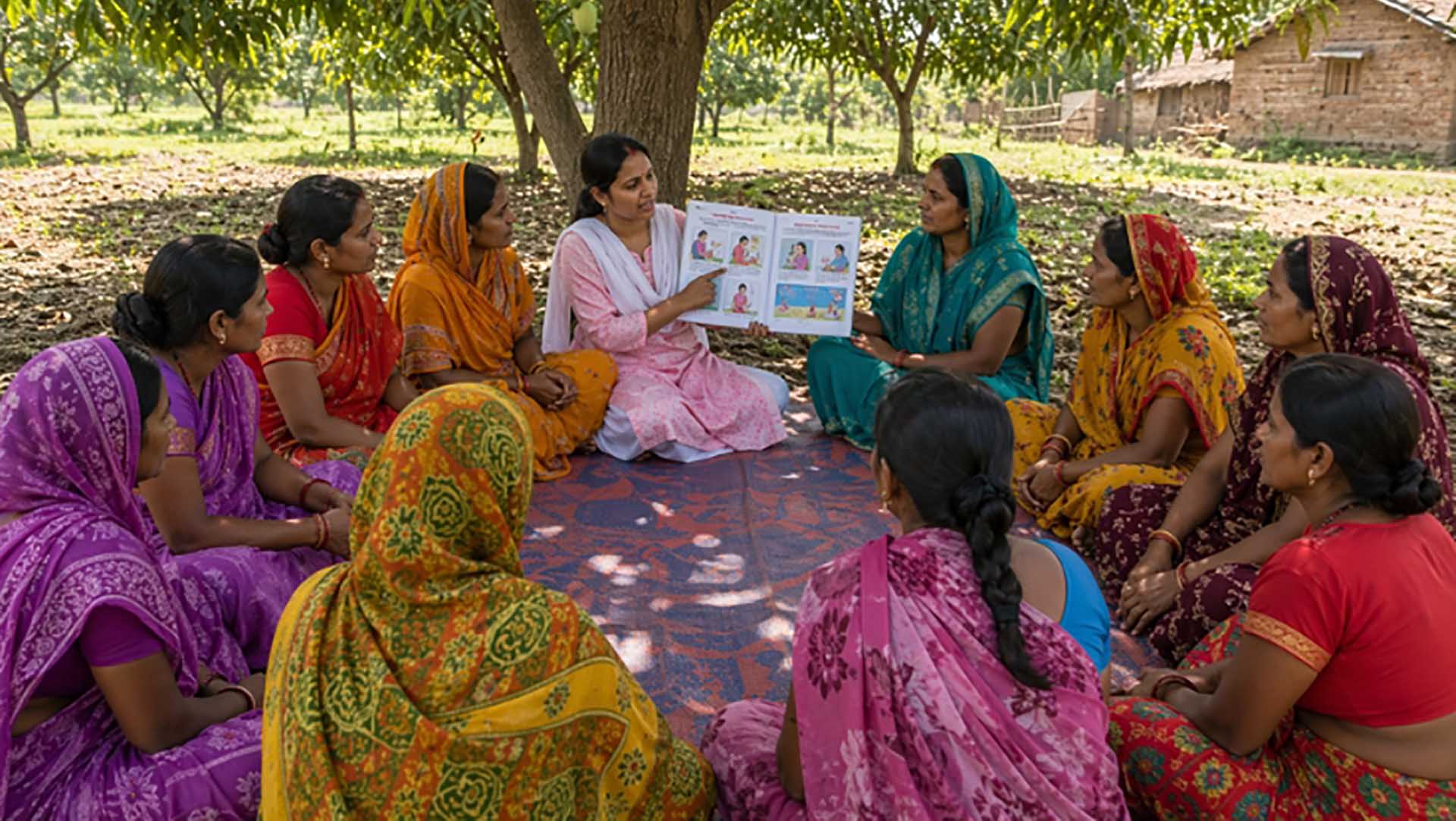
A behaviourally informed intervention was tested in Jehanabad Sadar block of Jehanabad district of Bihar, offering an opportunity to observe how small design shifts influenced women’s health-seeking behaviour on the ground. This was done under Majhdhaar that brings the spotlight on women’s wellbeing beyond maternity. A culturally relevant counselling tool was designed to raise awareness among women and engage them emotionally, prompting them to recognise symptoms and take early action. Community professionals were trained not only to deliver messages but also to counsel women sensitively using lived experiences, suggest practical solutions, and link them to local health facilities.
Discussions around women’s health, gynaecological or genitourinary concerns were openly discussed during self-help group (SHG) meetings, creating a safe and trusted space for them to discuss their issues without any hesitation of being judged. When women of different age groups, including trained community cadres, began talking openly about their health issues in SHG meetings, others felt more comfortable sharing their own concerns and realised that these were common problems, not a matter of shame, which requires timely care, not ignorance. Counselling during home visits ensured engagement of other family members and gradually led to increased spousal communication around women’s health.
These initiatives enabled women to pause, reflect on their health and take a small but necessary step of visiting the nearby health facility to initiate a larger shift towards strengthening their agency and improved overall health.
From Silence to Care
Pinki Kumari (name changed), a widow and the sole caregiver for her two children, had long suffered from reproductive health issues such as irregular menstruation, frequent urination, and burning during urination. She avoided seeking care due to fear and stigma. However, after counselling by community professionals, she recognised the seriousness of her symptoms and visited doctor. Treatment helped her feel better.
Pinki’s experience reflects the behavioural shift the intervention has aimed to enable by disrupting habitual silence and delay, and replacing it with reflection, confidence, and early action. The intervention helped her pause, reassess symptoms she had long normalised, and recognise them as serious health concerns.
The intervention is leading to a visible shift where women earlier waited until symptoms became severe, many now seek care at the first sign of discomfort. There is increased openness around gynaecological concerns, improved confidence to seek care early, and greater utilisation of nearby health services.
Key learnings highlight that small, culturally grounded design shifts—such as early interventions, sensitive counselling, trusted spaces for sharing, increased spousal communication and clear pathways to care—can meaningfully strengthen women’s agency and translate reflection into action.
Women are one of the key pillars of Viksit Bharat 2047, recognised as central to India’s inclusive and sustainable development. Preventive, early health-seeking among women reduces long-term health costs, improves productivity, and, by strengthening women’s health and agency, builds human capital and social and economic participation that are essential for India’s long-term development. When women are healthy, informed, and able to act, families are stronger, communities are more resilient, and India moves closer to the holistic progress envisioned in Viksit Bharat 2047.
The author is Swati, SBC and Design Researcher, Bihar office, PCI India