
The Personhood of Women
Why is it so difficult for us to see women and girls as the centre of their own lives?
When we start speaking of women, especially across the life course, the question of (in)fertility inevitably crops up, from women facing it themselves to experts and health practitioners. While the discussion around (in)fertility is important and often carries deeply personal experiences, what I find striking is that it is often the first, and perhaps the only, lens through which women are understood.
The “Hysterical” Dilemma
The uterus, the very same organ, that once and perhaps still, remains tied to womanhood, the very same organ that birthed the term “hysterical” is an organ the women usually have a complex relationship with. The uterus is pain, the blood that it lets every month is pain, giving birth is pain and apparently this is a sacrifice women must make. In India, the average age of hysterectomy is 34 years. The average age of family completion is approximately 27 years. This indicates a pattern where the completion of childbearing leads to a realisation of futility of this organ. We start associating the uterus with infections, pain and bleeding and it is thus the first thing to go.
In our work in Bihar, we have found that all vaginal discharge is attributed to the uterus and pathologisation of this discharge means that women become vulnerable to unnecessary procedures that harm more than they heal. In two blocks of Jehanabad, we found that 44% of the women who had undergone hysterectomy, had done so before age 30. Most of the women we interviewed further were not satisfied with the procedure as the health issue/complaint which they had originally approached with remained partly addressed (or in some cases unaddressed) even after the procedure. They continued to show up for their families and work, but nothing had improved. Perhaps, then the uterus and in some cases the eggs, too, wasn’t the enemy.
The Subsidy of Women’s Bodies
The more I engaged in these conversations the more I learnt of the relationship we are made to have with our bodies. One theme that emerged repeatedly in our conversations was the pride associated with endurance. Women spoke of continuing to work through pain, fatigue and discomfort as though it were an ordinary expectation rather than a burden. I found myself thinking of women I know, work with and admire, and of the ways in which we often celebrate our ability to keep going. Yet this raises an uncomfortable question. How do we account for suffering that is never granted the status of illness? If pain is expected, fatigue is normal and rest is negotiable, much of women’s ill health remains invisible long before it reaches a dataset or a clinic.
In our first Majhdhaar Dialogues with AIIMS Patna, Ms Irina Sinha, Senior Director – Strategic Partnerships & Systems, PCI India, said something that stuck with me: “The system continues to invisibilise the silent GDP of women’s bodies.” Women’s bodies subsidise families, labour markets, and institutions through productive labour, reproductive labour, social reproduction, and the absorption of illness. This subsidy is sustained by the resignation of the sick role. Women delay or minimise care not because symptoms are absent, but because time, legitimacy, autonomy, and resources are constrained.
This is sustained because women are expected to remain workers, caregivers and nurturers first, and persons second. Perhaps that is why the observation made by Dr Anil Koparkar, Additional Professor, Community & Family Medicine, AIIMS Gorakhpur, during the Gorakhpur Majhdhaar Dialogues was pertinent: “Women are never the primary patient(recipient of healthcare), not even during pregnancy. The primary patient is someone else.” He was alluding to the elephant in the room – women are only thought of in the context of the role they play in others’ lives – even when their health is being prioritised apparently, it is tied to a function they serve, i.e., bearing children. This continues as we keep thinking about women as centres of family and care providers. Her own wellbeing, for the sake of it, is often forgotten.
Prioritising Self amidst the Web of Roles
Why is it so difficult for us to see women and girls as the centre of their own lives? This is an unpleasant question to be reminded of yet, as we navigate women’s health interventions and research, it is one that grounds me.
For all the discomfort these questions evoke, they are also what give me conviction in the work we do. Through Majhdhaar dialogues, body literacy work, and engagements with women’s collectives, I have repeatedly been reminded that women carry the entirety of their lives at once, even when they are only able to seek care, attention or support for fragments of it.
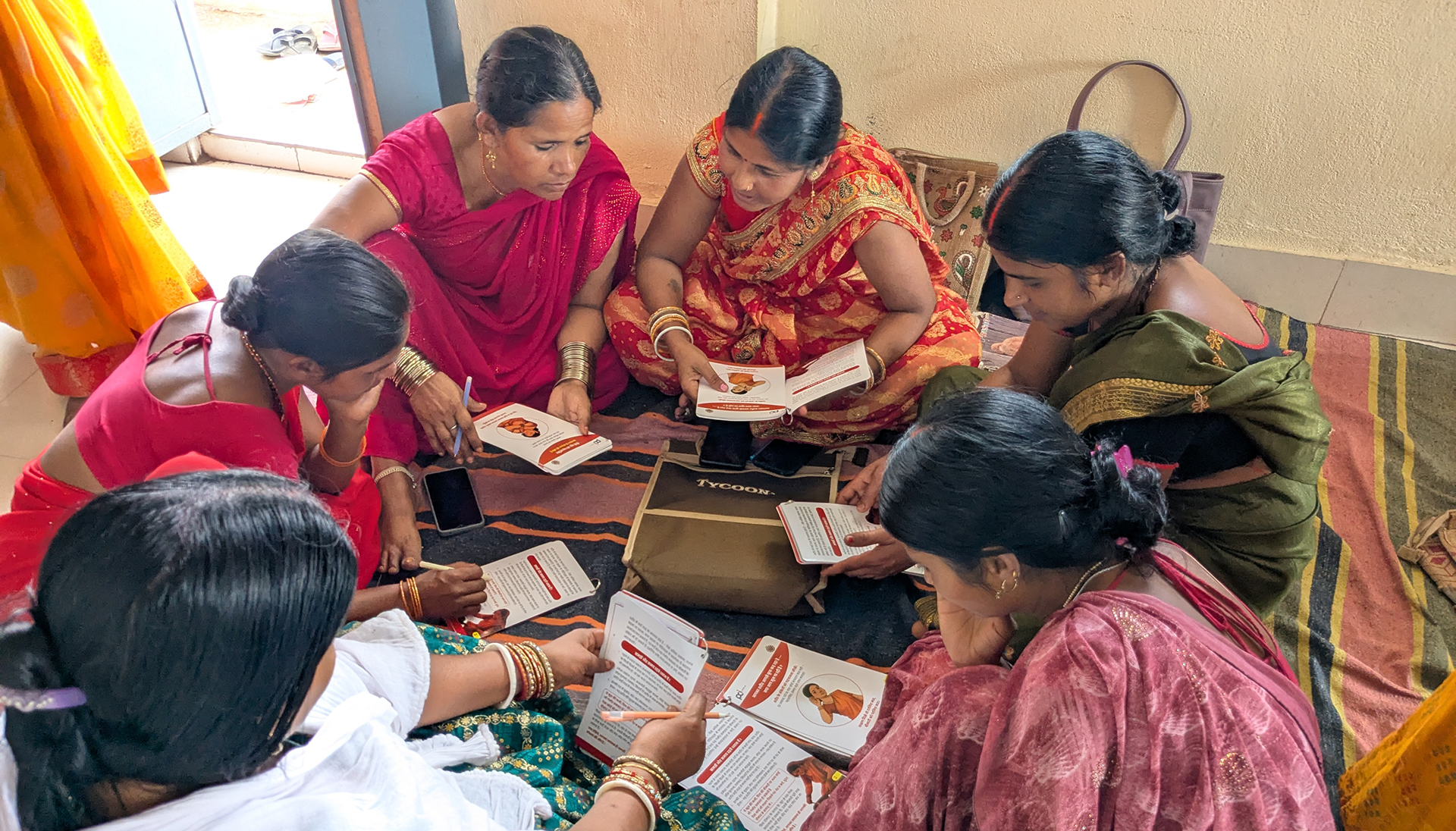
Conversations that begin with symptoms often weave between illness, work, caregiving, nutrition, rest, ageing, finances, relationships, worries and aspirations. The body literacy tool, an education and communication tool developed by PCI India for Majhdhaar, has evolved from a prompt for screening and care-seeking to conversations around self-care, hygiene, nutrition, rest and sexual health, shaped by the realities women themselves chose to discuss. In many ways, Majhdhaar’s greatest contribution is not simply creating new interventions, but creating space for women to be seen beyond maternity, for who they are.
A woman is not the sum of her parts, and perhaps our greatest responsibility is to exercise caution before reducing her to organs and functions and forgetting the multitudes she not only contains but contends with every day.
The author is Dr Shivangi Shankar, Manager –Inclusive Health Systems and Knowledge Management at PCI India.