
India’s Heat Crisis Is Now a Hunger Crisis
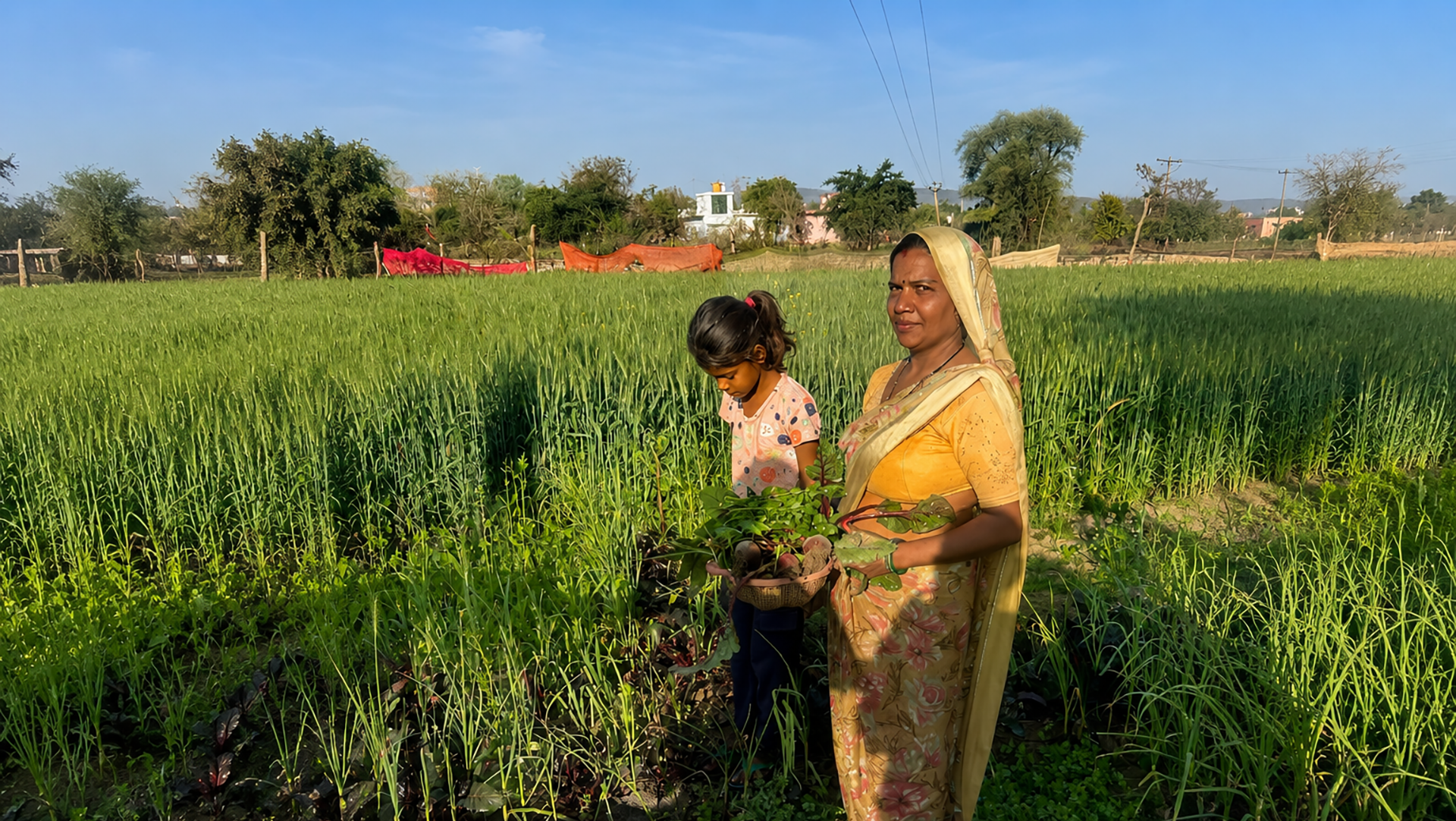
As temperatures rise across rural India, hunger is no longer just about poverty—it is felt in empty stomachs, tired bodies, and mothers who have nothing left to give.
Sumitra sits on the cool patch of mud floor inside her home. Outside, the air feels like fire. She is seven months pregnant. In front of her is a small bowl of rice gruel. She stares at it for a long time.
“I know I should eat,” she says softly. “But I can’t.” The heat has taken her hunger away. Her throat is dry. Her head feels heavy. Sweat gathers and disappears just as quickly. Her body feels weak, but the thought of food makes her uneasy.
Beside her, her three-year-old daughter lies still, too tired to play. Even water is refused. By noon, the temperature will climb past 45°C. Inside, it will feel even hotter. Sumitra places a hand on her belly. The baby moves—faintly. She closes her eyes and wonders: “How do I feed this child when I cannot feed myself?”
When Hunger Is Not About Food Alone
We often think hunger means there isn’t enough food. But here, there is something more unsettling. Food is there—but the body cannot take it in. The heat dulls appetite. It slows everything down. Pregnant women, who need nourishment the most, find themselves eating the least.
And even then, they step back. “I’ll eat later,” a mother says. “Let the child eat first.” Later often never comes.
Summer changes what a family eats. Vegetables wilt before they can be cooked. Milk turns sour. Eggs feel too expensive to risk. So, meals become simpler, heavier, emptier—rice, roti, salt, oil, tea. No one says it out loud, but everyone feels it: something important is missing.
Children grow quieter. They fall sick more often. They tire easily.
And mothers notice—because they are the ones watching, worrying, and quietly adjusting their own meals to make sure others get enough.
When Work Disappears
By mid-day, the fields are empty. No one can work in that heat. For women who depend on daily wages, this means no income for the day. Sometimes, for many days. Sumitra’s husband leaves each morning hoping to find work. Some days he returns with nothing. Water is harder to find too. The nearest source is farther now. Women walk longer distances, carrying heavy pots under a punishing sun. By the time they return, they are exhausted—but there is still cooking, cleaning, caring.
And eating? That remains last.
Heat does not just tire the body—it wears it down slowly. For women like Sumitra, it means worsening weakness, dizziness, and anaemia. It makes pregnancy harder. Recovery slower. And after the baby is born, it brings another quiet fear—will there be enough milk? Because without enough water, without enough food, even a mother’s body begins to give less. Still, she keeps going.
This is not just her story. There are thousands of women like Sumitra. Different villages, different names—but the same quiet struggle. They do not call it a “climate crisis.” They do not call it a “nutrition challenge.” They call it a long, hot day.
A missed meal. A child who won’t eat. A body that feels too tired to continue.
But It Can Be Different
In some villages, women have begun to change this story. They are growing crops that survive the heat—millets, pulses, greens. They are storing water closer to home. They are learning what to eat, how to cook, how to care for themselves in this weather. And slowly, things are shifting.
Mothers feel stronger. Children begin to play again. Meals become fuller, more nourishing.
It doesn’t happen overnight—but it happens.
The heat will not stop. It is already here, arriving earlier each year, staying longer than before. But what happens next is still up to us. We can continue to see this as just another summer.
Or we can see what it really is— A mother unable to eat. A child growing weaker. A future slowly slipping away.
Sumitra is not asking for much. Just enough food to eat. Enough water to drink. Enough strength to bring her child safely into the world. That should not be too much to ask.
Because behind every heatwave is a mother doing everything she can to hold her family together—and hoping someone, somewhere, is paying attention.
The author is Dr. Preeti Khanna Manager, Intersectoral Convergence – Health & Nutrition, PCI India