
Behind every refusal is a story—and behind every ‘yes’ is a life protected
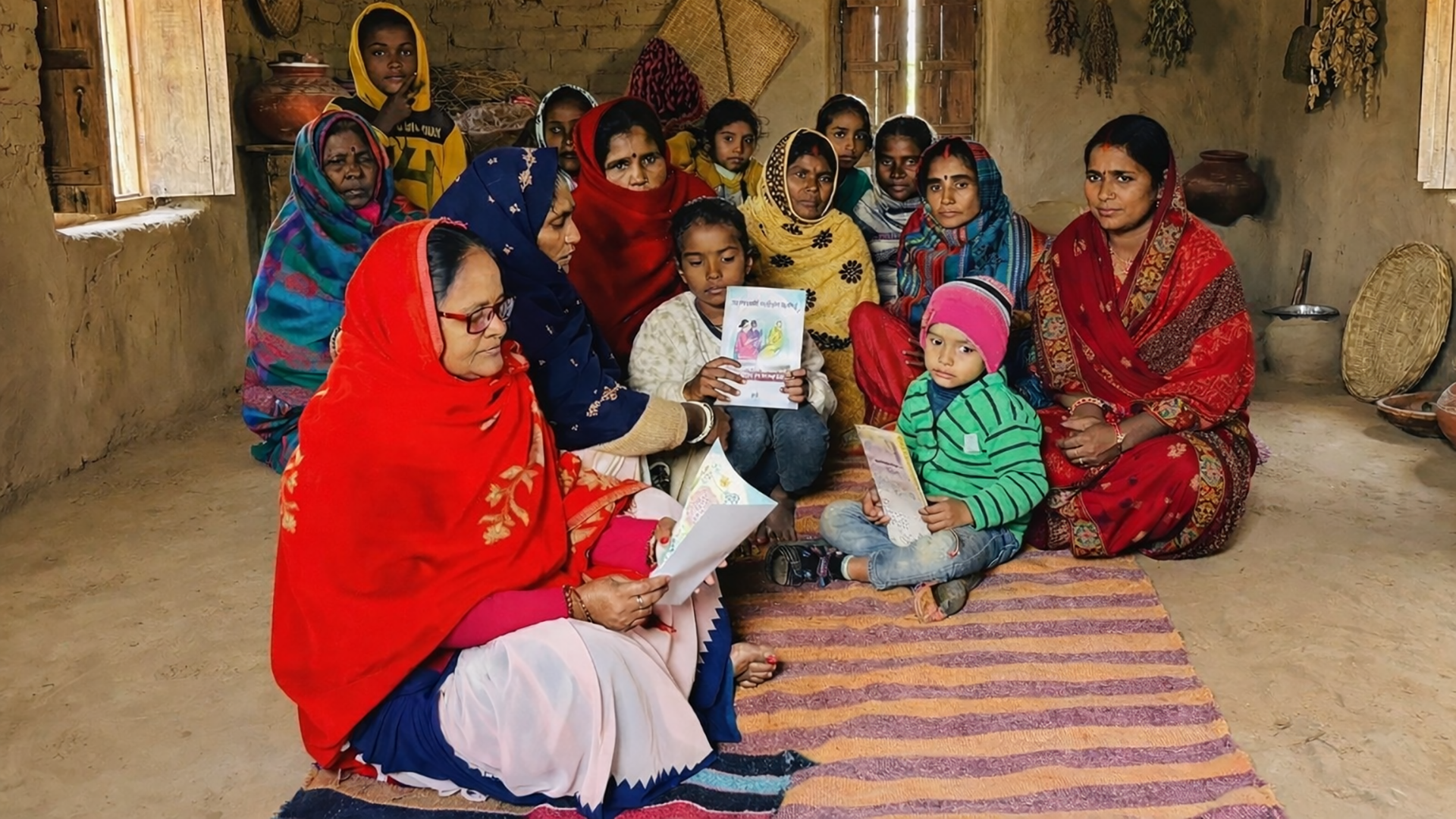
Refusal in immunization is not just a health gap; it’s rather a human story. Fear, memory, myth, and a mother trying to protect her child in the only way she knows are what lies behind every “no.”
But when that “no” slowly transforms into a “yes,” it becomes more powerful than any intervention. It becomes a turning point.
Working in the blocks like Paliganj and Masaurhi of Patna district has shown me that converting a refusal is not just about vaccines—it is about listening, honouring concerns, and building trust brick by brick.
A Mother’s Fear in Siyarampur
We discovered a hard-core refusal case in March, while on a field visit to Siyarampur, in Paliganj.
After receiving only the birth doses (OPV-0 and BCG on 07.02.25) for a child born on 26.01.25, Sunaina Devi, the mother, stopped the child’s immunisation.
It wasn’t anger that caused her hesitation. It was fear.
“Hum nahi lagwayenge, baccha bimaar pad jaata hai.”
For her, refusal was protection.
To address this, we activated a circle of trust rather than pressure:
- ASHA began frequent, calm visits
- District officials joined to reinforce confidence
- Village influencers and peer mothers from Jeevika shared experiences
- IPC sessions of refusal families with ward members and Mukhiya Ji.
We ensured she never felt judged—only supported
After months of this consistent, human-centered engagement, the shift happened quietly.
One afternoon, in the month of December surrounded by women she trusted, Sunaina said softly,
“Theek hai, hum lagwa lenge.”
That “yes” opened the door to a new beginning.
One more life moved closer to safety with her child received the upcoming vaccinations.
Leadership Takes on a New Form
Another significant event occurred in Tinneri village of Masaurhi, where two to three HR children had not yet received their vaccinations.
When we approached the Mukhiya ji for support in mobilisation, he said with concern, “Log tika lena hi nahi chahte. Jab aapki nahi suni, toh humari kya sunenge?”
His response reflected a sense of helplessness, showing that leaders often need encouragement and confidence-building just as much as the community does. He was unaware of the full impact of his role.
As we spoke, the conversation moved from uncertainty to possibility. Understanding the influence his leadership could have on his community’s health made him pause, almost surprised that someone had recognised his potential.
We explained how a single letter from him could bring a medical camp to his village and the seriousness of the refusal cases. For the first time, he realised direct connection between his leadership and health of his community.
After a few minutes, he declared, “Hum letter likhte hain.” “Aap bolo, kya karna hoga?”
He not only wrote a formal letter to the MOIC requesting a health camp but also walked with us door-to-door to counsel hesitant families.
This went beyond simple administrative assistance. It was empowerment, ownership and leadership in action.
The Human Side of Immunisation
These experiences revealed something profound, Many leaders don’t lack willingness, they lack awareness of their own influence. Once they understand, they become unstoppable.
These stories serve as a reminder that immunisation efforts involve more than just dosage, coverage, and data. It has to do with:
- Empathy shifting perceptions
- Trust strengthening communities.
- Leadership influencing behaviour.
- A mother’s “yes” transforming a child’s life.
Every conversion of a refusal is a triumph of connections over fear.
Every self-driven and committed Mukhiya serves as a bridge between the public and public systems.
Eevery health camp reflects collective responsibility.
And above all, routine immunisation is a community initiative as it is a medical intervention.
A Fresh Start in Every “Yes”
These small moments are building up to something bigger across the Patna district, including Paliganj, Masaurhi, and many more.
A mother agrees.
A Mukhiya steps forward
An ASHA persists
A village coming together.
And in these moments, we witness the real progress of public health. Because a single “yes” may save one child’s life—but it also reshapes the future of the entire community.
That is the human side of refusal conversion.
That is the new hope emerging in Bihar’s villages.
And that is where the story of healthier generations truly begins.
The author is Sanskriti Bhardwaj, District Coordinator – Patna at PCI India