
Beyond Skills: Building Pathways to Opportunity
Why sustainable development depends not just on building people’s skills, but on creating markets, institutions and reliable opportunities that connect their capabilities to lasting livelihoods.
Many development programmes are built on the idea that people need more skills, knowledge, resources, or motivation to improve their lives. Training and capacity-building activities are thus, a crucial part of development interventions. Yet the more time I spend in the field, the more I find myself questioning a different assumption. What if effort is not the missing ingredient?
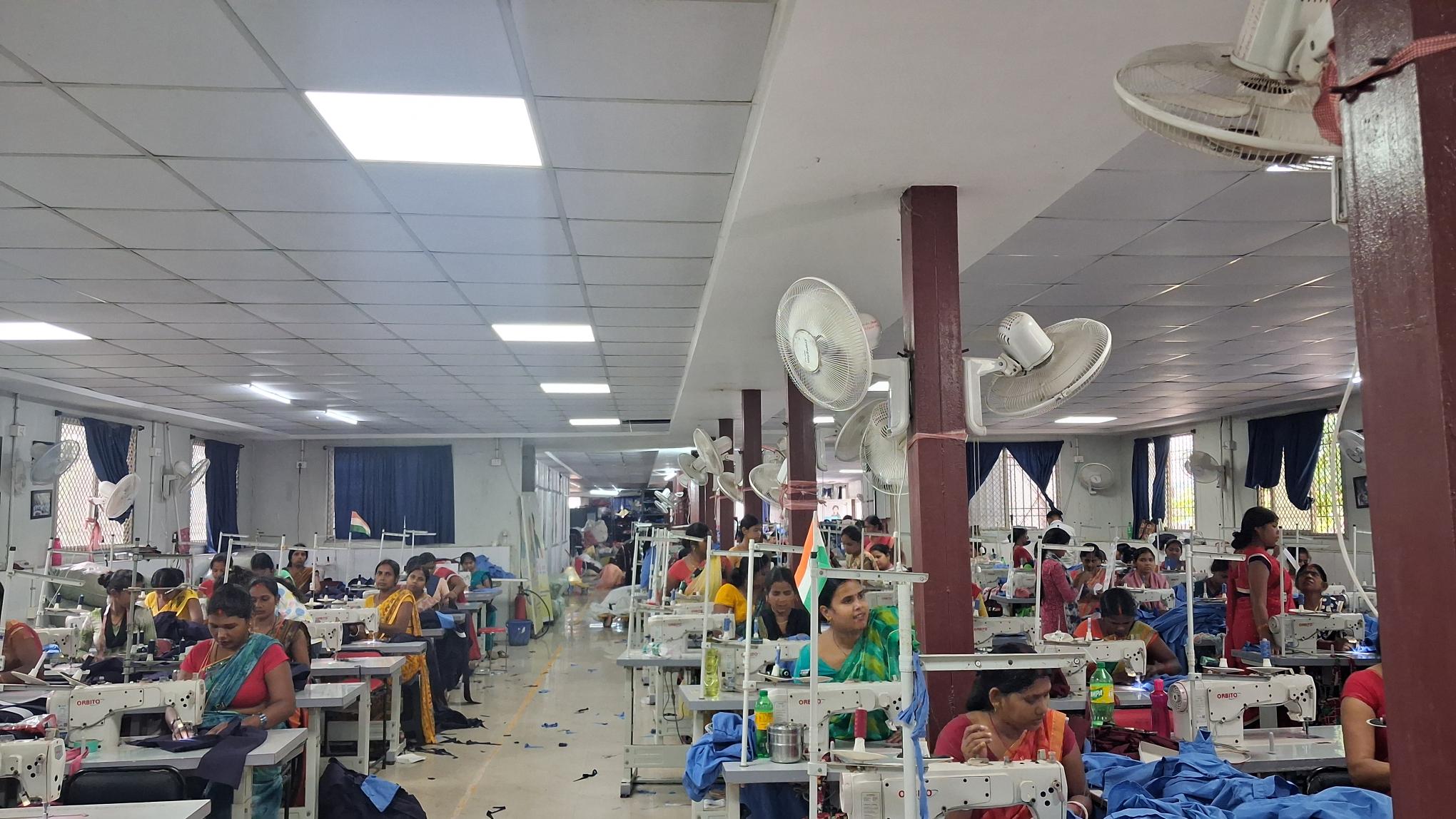
I recently visited a stitching enterprise where nearly 200–250 women associated with self-help groups (SHGs) were engaged in producing school uniforms. The enterprise had secured a large order, creating a steady stream of work for the women involved. At first glance, it appeared to be a straightforward livelihood intervention. Women were stitching uniforms and earning between ₹15,000 to ₹20,000 per month.
But the more I listened, the more I realised the story was about much more than income. Several women spoke about how earning regularly had changed the way they were viewed within their households. Family members who were once indifferent now supported their work. Their opinions carried greater weight in household decisions. Some described feeling more confident than they had before.
I was particularly struck by a group of women who had been trained to manage different aspects of the enterprise. They were coordinating operations, overseeing production, and handling responsibilities that extended beyond stitching. There was a visible sense of ownership in the way they spoke about their work.
And I remember wondering: what had actually changed? These women had not suddenly become hardworking. The willingness to work had always existed. What had changed was the system around them. Their skills were now connected to a reliable market. SHGs had provided a collective platform. Institutional support had helped create an enterprise capable of securing large orders and sustaining production. For perhaps the first time, effort and reward were directly connected.
Yet the relationship between effort and opportunity is more nuanced than it first appears.
It would be inaccurate to suggest that people always remain equally motivated regardless of circumstances. When individuals repeatedly encounter markets that do not reward their skills, jobs that offer little growth, or systems where hard work rarely changes outcomes, motivation itself can begin to erode. In such situations, what appears to be a lack of ambition may actually be a rational response to limited opportunity. Opportunity therefore does more than generate income. It creates incentives. It gives people a reason to invest in skills, take risks, work harder, and imagine a future that is different from the present.
The women I met were not simply earning more because work was available. They were operating within a system where additional effort produced visible returns. The connection between effort and reward was clear. And when people can see that connection, aspiration often follows.
Opportunity Creates Incentives
This observation has increasingly shaped how I understand development challenges. Livelihoods are often approached through the lens of skill-building. Skills are undoubtedly important, but they are rarely sufficient on their own.
An SHG who learns how to manage an enterprise still needs customers. A farmer who adopts improved agricultural practices still needs reliable buyers. Trained youth still need pathways leading to employment or entrepreneurship. Without these connections, capabilities remain underutilised. The challenge, therefore, is not only creating skills. It is creating systems that allow those skills to generate sustainable economic outcomes.
Institutions Connect Effort to Markets
The stitching enterprise also highlighted another often-overlooked reality: institutions matter. The enterprise was not successful because hundreds of women happened to possess tailoring skills. It worked because those skills were organised, coordinated, and connected through institutions capable of managing production, securing orders, maintaining quality standards, and distributing opportunities.
This distinction is important. While individual resilience matters, it alone cannot explain sustained progress. Individual effort may create movement, but institutions often determine whether that movement can be sustained and scaled.
Rethinking What Development Must Solve
As someone still learning about the sector, one insight has become increasingly difficult to ignore. Effort matters, but so do the opportunities that shape it. When people can see a clear link between hard work and progress, they are more likely to invest, persist, and aspire for more.
The question, therefore, is not simply whether people are willing to work hard. It is whether systems exist that allow that hard work to translate into meaningful returns. Because development is not simply about creating programmes. It is about connecting effort with opportunity.
When that connection is weak, people disengage, aspirations shrink, and progress stalls. When that connection is strong, people invest, adapt, and grow. And perhaps that is where meaningful development begins, not by teaching people to work harder, but by creating conditions in which hard work is finally worth it.
The author is Srishti Mishra, Manager – Strategic Partnerships & WEE, PCI India.