Beyond Survival: Unlocking the Power of Community for Early Childhood
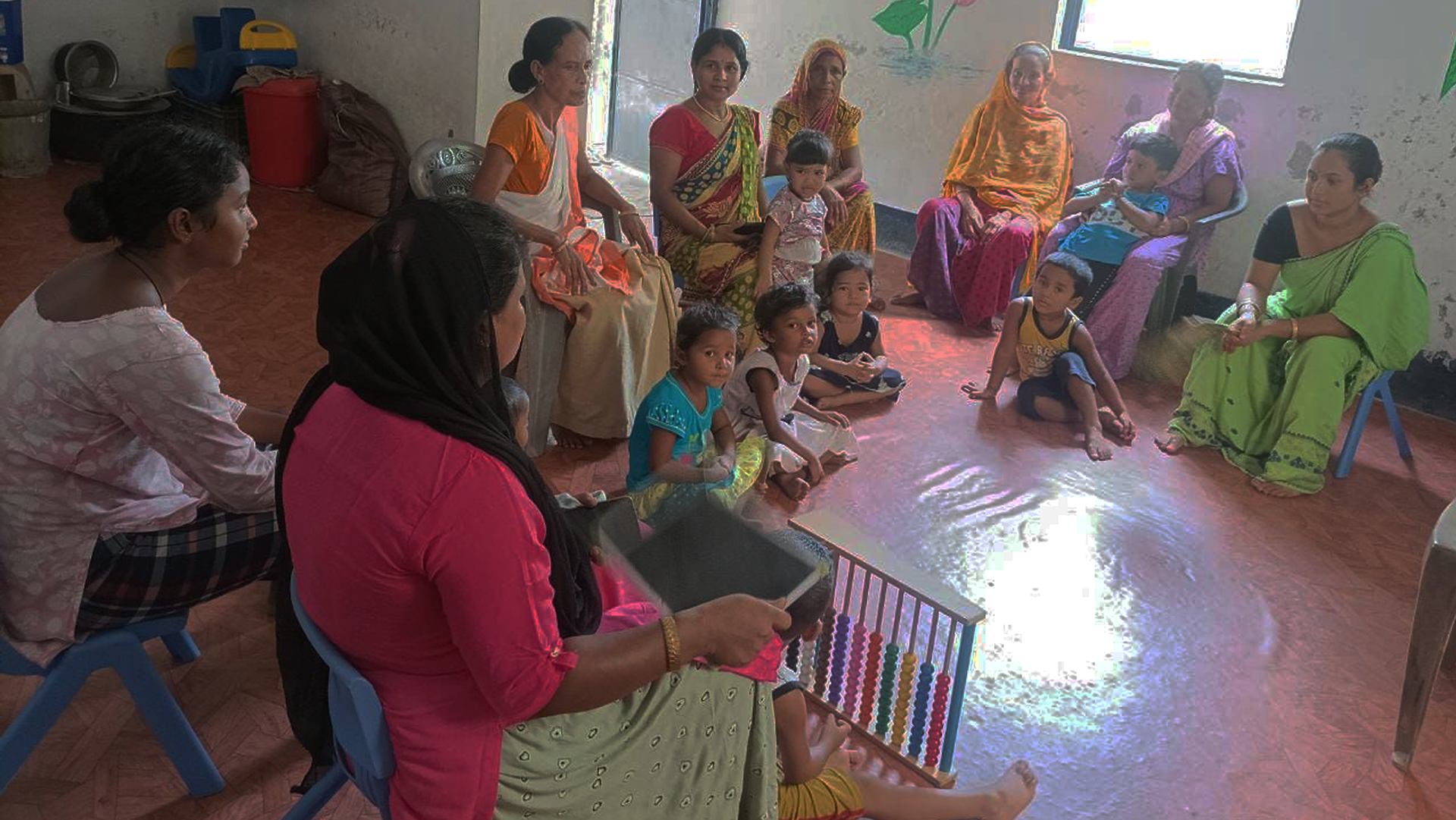
In community-led meetings, such as Self-Help Groups, across the country, a quiet revolution is unfolding on how communities talk about feeding, play, and care for children
A few months ago, I was sitting with a group of women in a village meeting. They were part of a Self-Help Group (SHG). The discussion began with savings but soon shifted. One mother spoke about her child not eating well. Another shared how she had started talking and playing more with her toddler after a recent session. Within minutes, the group was exchanging ideas on feeding, play, and care.
That moment stayed with me. It made one thing very clear. SHGs are not just financial platforms. They are powerful spaces where child health and development can truly change. And yet, we are not using this potential fully.
Are Our Children Truly Thriving?
India has made strong progress in improving child survival. More children are living beyond early childhood. But survival is only the first step. The real question is, are children thriving?
The early years are critical. What a child experiences in the first six years shapes how they think, learn, and grow. Nutrition is important, but it is not enough. Children also need care, interaction, play, and a safe environment.
In my work across public systems, including with government and development partners, I have seen a common gap. We still approach child development in parts. Nutrition is addressed separately. Health is handled separately. Early learning is often missing from everyday conversations.
At the community level, this becomes even more visible. A mother may be told what to feed her child, but not how to engage, talk, or respond. Frontline workers are expected to deliver everything, often without simple tools that make their work easier. The result is a system that supports survival, but not always full development.
The Untapped Potential of Community Platforms
Frontline workers like Anganwadi Workers, ASHAs, and ANMs are doing important work. But they are managing multiple responsibilities with limited time and resources. At the same time, caregivers want the best for their children but may not always have access to practical guidance.
This is where community platforms can make a real difference. In my current work with the Ministry of Rural Development, I support programmes that bring together food, nutrition, health, and WASH through community systems. One platform that stands out is Self Help Groups.
These groups already exist. They meet regularly. There is trust. When discussions on child feeding, hygiene, and caregiving are introduced in this space, they are not seen as instructions. They become shared conversations. Women learn from each other. They ask questions. They try new practices in their own homes.
I have seen how a simple discussion in a group can lead to better feeding practices, more interaction with children, and improved hygiene behaviours. This is not top-down communication. This is peer learning. And it works.
To support this, we have been working on making information more practical and accessible. This includes developing simple tools such as flipbooks, counselling cards, posters, and short content that frontline workers and community members can easily use. We have also focused on formats that work in real settings, especially where literacy or connectivity may be limited.
Small Actions, Big Changes for Young Children
But the real change does not come from the tools alone. It comes from how they are used. Group discussions, shared experiences, and local examples make the information meaningful.
One important lesson from the field is that change does not always need complex solutions. Sometimes, it starts with small actions. Talking to a child while feeding. Playing using everyday objects. Washing hands at the right time.
When caregivers see a positive response from their children, they continue. Confidence builds. These practices become part of daily life.
If we want children to truly thrive, a few shifts are important. We need to bring together nutrition, health, and early learning instead of treating them separately. Frontline workers need simple and practical tools. Community platforms like Self Help Groups should be used more actively for behaviour change. Most importantly, we need to listen to what is happening on the ground and build from it.
We already have strong policies, programmes, and platforms. What we need is better connection between them.
That village meeting I mentioned earlier was not an exception. I have seen many such moments. They all point to the same truth. When communities are engaged in the right way, change happens.
Moving from survival to thriving is not about doing more. It is about doing things differently. And sometimes, it begins with a simple conversation among women who are ready to learn from each other and create better futures for their children.
The author is Khushboo Saiyed, Manager – Capacity Building, PCI India