
Boosting Rural Youth Employment: Rethinking Skill Development Investments
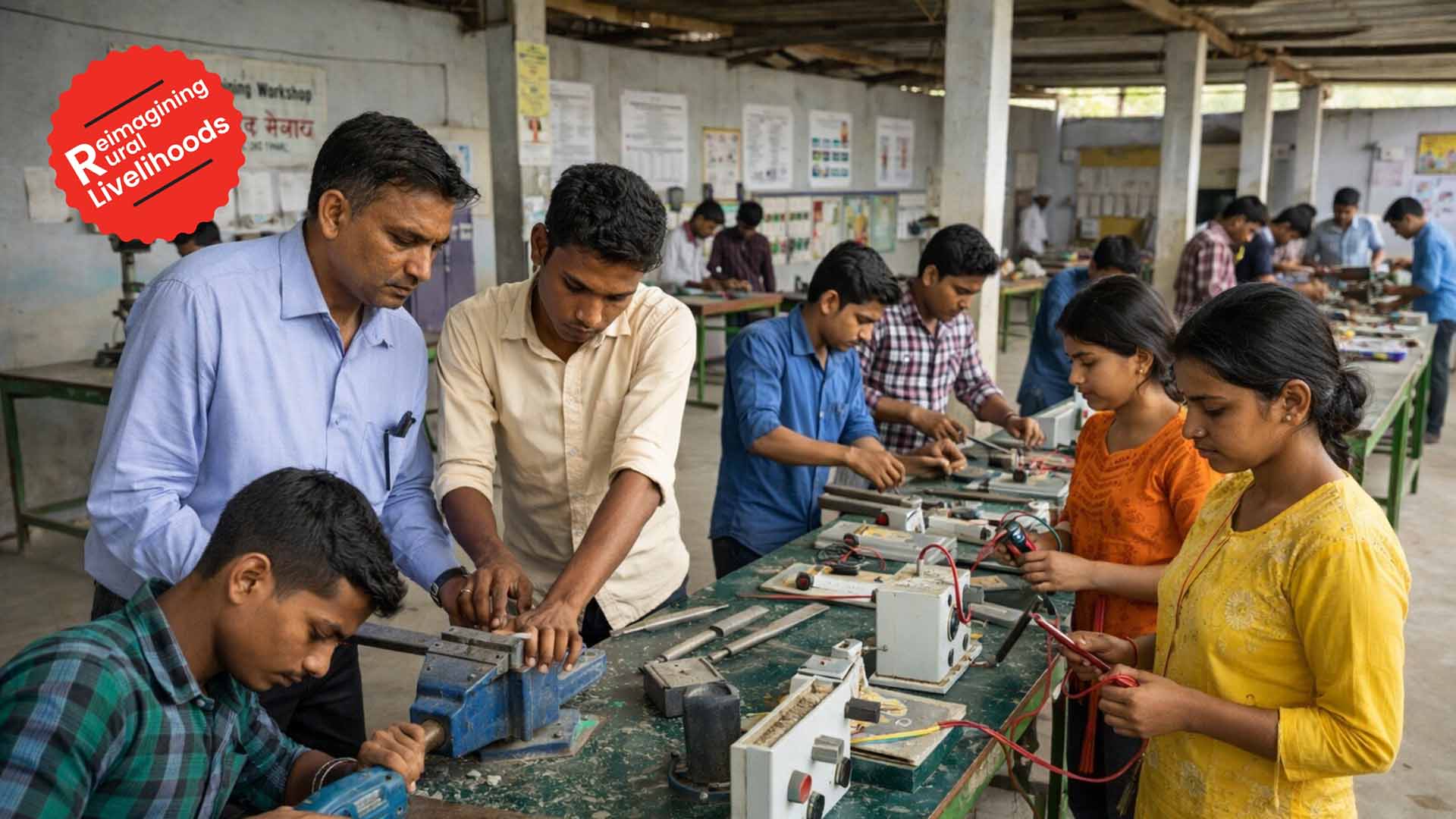
India’s rural youth hold immense potential, and unlocking this demographic dividend calls for demand-driven skilling. By aligning skills with market needs, we can create pathways to sustainable and quality employment.
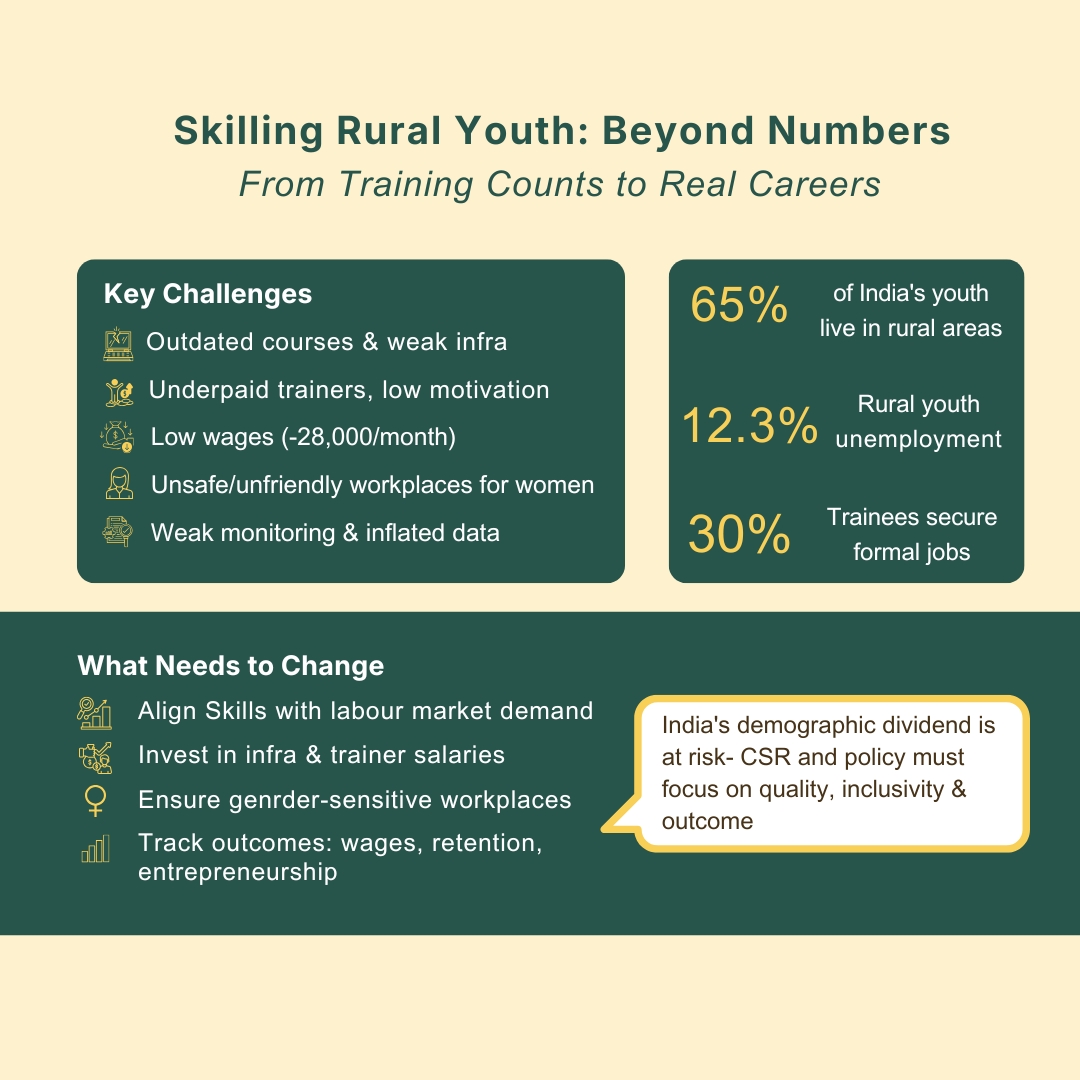
India’s rural youth—nearly 65% of the young population—face rising unemployment and underemployment. The Periodic Labour Force Survey (2023) reports rural youth unemployment at 12.3% (13% for males, 10.7% for females). While lower than urban rates, the challenge lies in the quality rather than the quantity, of employment opportunities.
 Skill Programme and the Market Gap
Skill programmes such Pradhan Mantri Kaushal Vikas Yojana (PMKVY), Deen Dayal Upadhyaya Grameen Kaushalya Yojana (DDU-GKY), and Skill India Mission have expanded opportunities, However, there exists a big scope for trainees to secure formal employment.
Outdated curriculum, weak infrastructure, and underpaid trainers result in low impact. Many centres continue courses that are not required as per current market demand, leaving the youth ill-prepared for modern industry and market demand.
Wages, Mobility, and MSME Practices
Low starting wages—often around ₹8,000/month—make migration financially unsustainable, while Micro, Small and Medium Enterprise (MSMEs) exploit prolonged “trainee” status with minimal stipends and limited progression, reducing motivation and retention. For women, workforce participation is further constrained by lack of gender-sensitive policies, affecting both entry and continuity. further discourage participation.
Building a Demand-Driven, Inclusive, Outcome-Focused System
There lies a big opportunity for India’s demographic dividend to deliver, if skilling is made demand-driven, inclusive, and outcome-focused. There is a need for aligning courses with labour market demand through regular analysis and regional distribution of skills centres accordingly.
To address this, policy and CSR investors must focus on:
- Market alignment: Regular labour market analyses to match courses with evolving job demand and regional distribution of skill centres accordingly.
- Infrastructure & faculty quality: Investment in modern training labs and competitive salaries for trainers.
- Sustainable livelihoods: Linking training with local MSMEs, FPOs, and rural enterprises to build localized job ecosystems.
- Holistic support: Career counselling, apprenticeships, and soft skills training alongside technical skills.
- Gender inclusion: Ensuring workplaces and training centres are safe, supportive, and equitable.
- Outcome-driven monitoring: Moving from counting trainees to measuring wages, job retention, and enterprise success.
With stronger alignment, better quality assurance, and inclusive policies, skill development can become a genuine engine of rural transformation, thus empowering youth and driving economic growth.
The author is Shantamay Chatterjee, Director – Livelihood with WEE, PCI India, and this is part of his blog series titled “Reimagining Rural Livelihoods: From Subsistence to Sustainability”.