Notification: PCI India has successfully migrated from pciglobal.org to pciglobal.in. All emails received from our new domain pciglobal.in are to be treated as undisputed origin.
- About Us
- Our Work
- Health and Nutrition
- Gender, DEI and Social Norms
- Women’s Economic Empowerment and Livelihoods
- Technical Support Unit for JEEViKA
- Cloud Kitchen
- Leveraging Public Procurement for WEE
- Technical Assistance to UPSRLM – Fishery Project
- Technical Assistance to UPSRLM – Beekeeping Project
- Udyamita
- Hunar: Pathways to Progress
- Go-HRM
- Technical Assistance to the Rural Development Department
- SAFAL I
- SAFAL II
- SAFAL III
- STREE
- BUPGP – SJY Urban
- Zero Poverty
- Weave Plus
- Swabhiman
- Migrant Cell
- SENU – GIZ
- Glasses for Livelihoods
- Take Home Ration
- Public Procurement
- Climate Action
- Social and Environment Protection
- Emergency Response
- Skilling & Employability
- Our Expertise
- PCI Research
- Events
- Resources
- Get Involved
- SSE

- About Us
- Our Work
- Health and Nutrition
- Gender, DEI and Social Norms
- Women’s Economic Empowerment and Livelihoods
- Technical Support Unit for JEEViKA
- Cloud Kitchen
- Leveraging Public Procurement for WEE
- Technical Assistance to UPSRLM – Fishery Project
- Technical Assistance to UPSRLM – Beekeeping Project
- Udyamita
- Hunar: Pathways to Progress
- Go-HRM
- Technical Assistance to the Rural Development Department
- SAFAL I
- SAFAL II
- SAFAL III
- STREE
- BUPGP – SJY Urban
- Zero Poverty
- Weave Plus
- Swabhiman
- Migrant Cell
- SENU – GIZ
- Glasses for Livelihoods
- Take Home Ration
- Public Procurement
- Climate Action
- Social and Environment Protection
- Emergency Response
- Skilling & Employability
- Our Expertise
- PCI Research
- Events
- Resources
- Get Involved
- SSE
Background
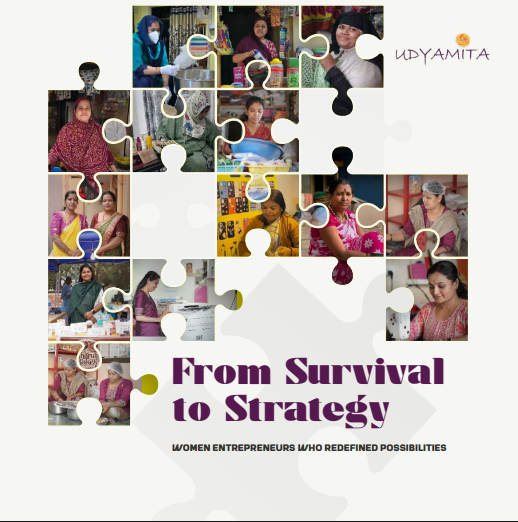
Urban poverty is a rising concern in India’s rapidly growing metro cities, where migration, informal employment, and high living costs contribute to economic marginalization—especially for women. While Self-Help Groups (SHGs) have emerged as strong community platforms in both rural and urban areas, urban poor women often continue to face challenges in accessing credit, skill development, and institutional support tailored to their entrepreneurial needs. Recognising this gap, the Udyamita initiative was developed by PCI India to empower urban women micro-entrepreneurs by addressing barriers in business capacity, market access, and financial linkages.
Scope of Intervention
Through Udyamita, PCI India aims to enable 450 urban poor women in Bengaluru to stabilise and scale their nano/micro-enterprises over an 18-month period. The initiative emphasises entrepreneurship as a viable pathway to sustainable livelihoods, socio-economic resilience, and inclusive urban development. Women-led enterprises will receive training on entrepreneurial development, seed capital, ongoing support to improve income generation, integrate into the formal economy, market linkages etc.
Program Lead & Collaborators
The Udyamita initiative is implemented by PCI India, with support from community networks, local financial institutions, and market stakeholders.
- Zee provides seed capital
- PCI India leads on-ground execution, training, mentoring, and evaluation.
- Community members, which also includes SHG, are key contributors to participant identification and grassroots mobilization.
- Private and public sector linkages are leveraged for financing, compliance facilitation, and market integration.
What We Did
The program is structured into three progressive phases over 18 months:
Phase 1: Identification and Capacity Building (0–7 months)
- Mobilisation and selection of 450 women based on poverty indices and entrepreneurial potential.
- Delivery of business appreciation training, enterprise development modules, and practical exposure to market dynamics.
- Development of individual project reports and business plans.
Phase 2: Enterprise Activation (5–12 months)
- Disbursement of seed capital to all eligible participants based on training performance and business viability.
- Establishment of formal enterprise units with compliance and productive asset acquisition.
- Linkage to networks, finance institutions, and market channels to ensure sustainability.
Phase 3: Enterprise Support (12–18 months)
- 6-month handholding support including business coaching, market access facilitation, and growth strategy assistance.
- Strengthening peer networks and enabling secondary employment generation through scaled businesses.
Outcome
- 450 women entrepreneurs trained and supported.
- 340 expected to report increased revenue.
- 250 enterprises formalized and linked with financial/market systems.
- 80% of participants expected to report improved decision-making and standard of living.