
From Waiting for Transport to Driving Change
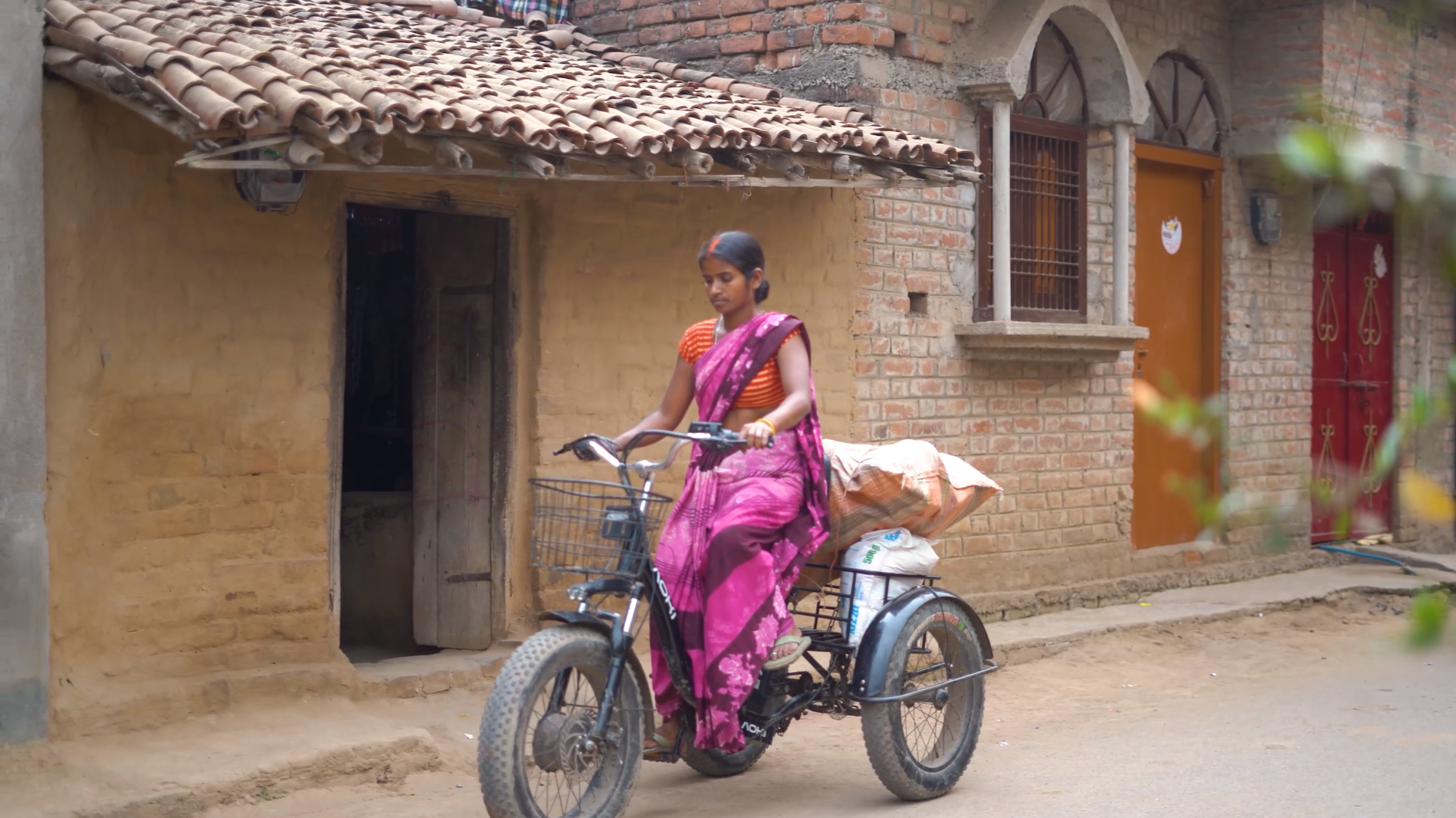
A small electric mobility intervention in Phulwari Sharif, Patna, shows how solving one everyday challenge—transport—can help women entrepreneurs save time, cut costs, grow income, and gain greater control over their work. A Bihar pilot that set women’s livelihoods in motion.
Women’s economic empowerment is often discussed in terms of finance, skills, and market linkages. All of these matter. But on the ground, one of the biggest barriers to women-led livelihoods is far more basic — it’s mobility.
For many women running small businesses, enterprise growth is not limited due to lack of efforts. It is often limited due to the daily struggle to move—whether to procure goods, deliver products, or respond to customer demand on time. When transport is unreliable, costly, or dependent on others, women lose not just money and time, but also business flexibility and decision-making power.
This is why mobility deserves greater attention in the livelihoods sector.
A recent pilot in Phulwari Sharif, Patna, Bihar, offers a compelling example of what happens when this barrier is addressed. Under a three-month initiative, four women associated with a self-help group (SHG) federation were supported through electric tricycles to strengthen their livelihood activities. What may appear to be a modest intervention delivered results that speak directly to sector needs: improved efficiency, reduced transportation costs, increased reach, and stronger confidence among women entrepreneurs.
Proven Success
The numbers tell a strong story. Across the pilot period, the electric tricycles covered more than 2,700 kilometres. They supported transportation of goods weighing between 10 and 50 kg, generated transport savings of more than INR 6 per kilometre, and helped save over 60 hours per month. The pilot also estimated an environmental gain of 540 kg of CO2 saved. These are not just statistics; they represent time returned, expenses reduced, and opportunities expanded for women trying to sustain and grow small businesses.
The impact becomes even clearer when seen through individual livelihood stories. One beneficiary engaged in fertiliser delivery needed to serve farmers across a 30-kilometre area, especially for smaller orders that are often hard to fulfil efficiently. Another woman running a grocery business in a relatively low-connectivity area needed regular transport to source stock from the market. Others used the support for grocery and garment-related business needs. The pilot documents show that improved transport access helped reduce logistics costs, improve customer responsiveness, and in some cases create additional income opportunities through delivery support and expanded business reach.
This is where the pilot becomes more than a success story—it becomes a lesson for programme design.
Too often, livelihood interventions focus on production, training, or credit, while underestimating the “last mile” barriers that determine whether women can actually convert effort into income. A woman may have products to sell, customers to serve, and the motivation to grow, but if she must depend on someone else to transport goods, wait for uncertain vehicles, or pay high delivery charges, her business remains constrained. Mobility, therefore, is not a peripheral issue. It is central to economic participation.
Deeper insights
The pilot also highlights the importance of inter-sectoral thinking. Women’s livelihoods are deeply linked with transport access, local infrastructure, clean energy solutions, and social norms around women’s movement and independence. If these dimensions are addressed together, the impact of livelihood programming can become more meaningful and sustainable. This is especially relevant for women in peri-urban and rural settings, where small enterprises often operate with narrow margins and limited support systems.
At the same time, the pilot offers valuable practical insights. The tricycles were seen as sturdy, useful, and capable of meeting real transport needs, with features such as adequate range and reverse gear adding value. Yet the experience also surfaced improvement needs around design, load handling, and learning time for women users. Such feedback is critical. It reminds us that scalable solutions must be user-informed, context-sensitive, and responsive to actual field experience.
What stands out most is the shift in agency. When a woman entrepreneur can move goods on her own schedule, reach customers independently, and reduce recurring transport expenses, she gains more than convenience. She gains control.
That is the real power of this Bihar pilot. It shows that women’s empowerment does not always begin with a large policy change or a complex system reform. Sometimes, it begins with solving one practical problem that shapes everyday enterprise realities.
And when that problem is mobility, the solution can move much more than goods. It can move confidence, income, and possibility.
The author is Santosh Kumar, State Consultant, GAVI Bihar, PCI India