
When Sustainability Meets the Factory Floor
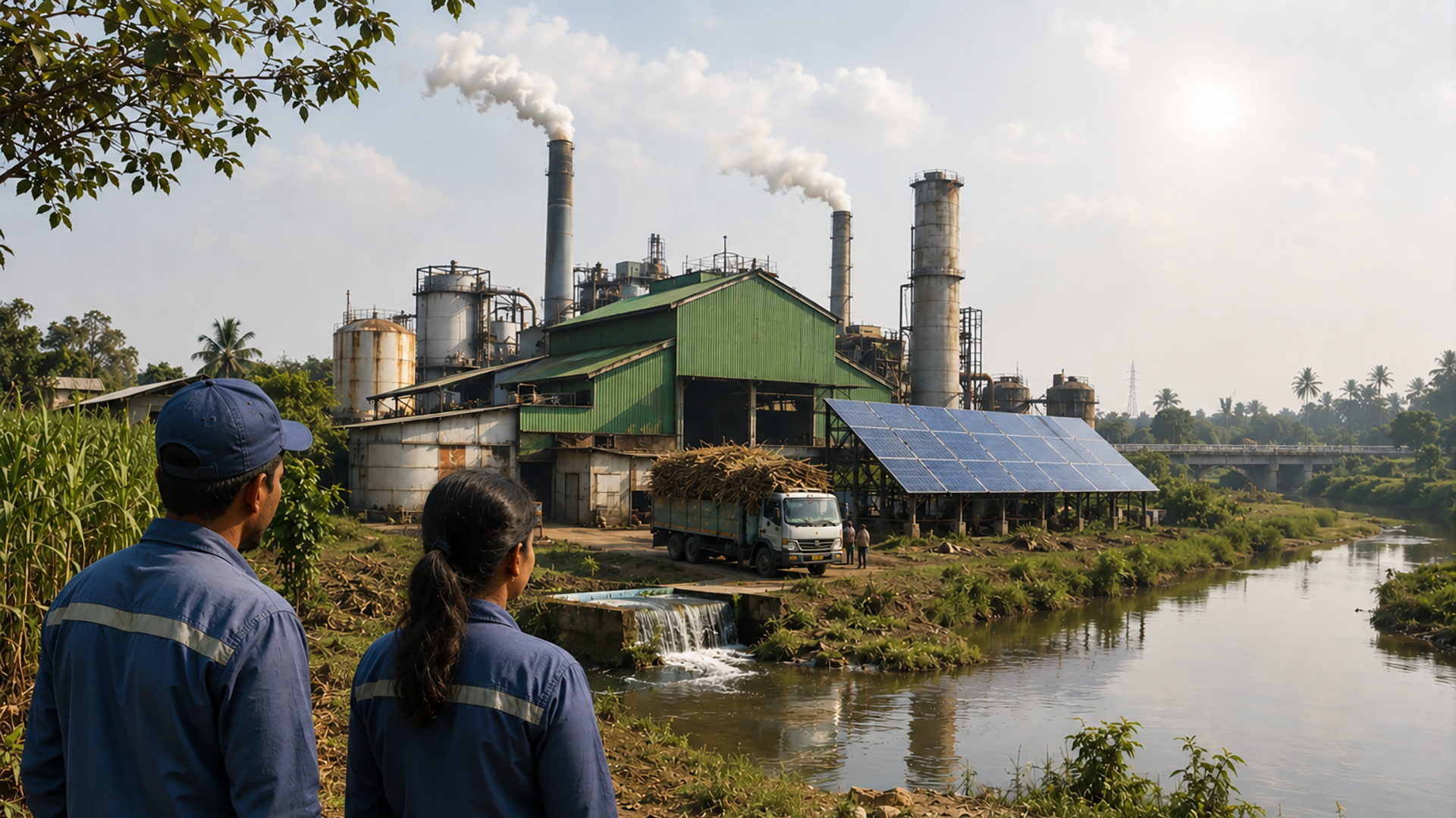
What conversations with small industries reveal about India’s path to green transition
On a February afternoon during a field visit to an industrial cluster in Uttar Pradesh, I found myself sitting inside a small tannery office. The owner, a second-generation entrepreneur, had been running the business for more than twenty years. Between conversations about leather exports, worker shortages, and rising electricity bills, our discussion slowly moved toward sustainability.
The cluster I visited is part of a region that has supported leather manufacturing for decades and employs thousands of workers across small and medium units. Like many traditional manufacturing clusters in India, it represents both economic opportunity and environmental responsibility.
When I asked the owner about adopting cleaner energy or reducing emissions, he paused for a moment and said something very honest, “We want to go green. But someone must show us how it makes business sense.”
That one sentence stayed with me long after the visit ended.
Across India’s industrial clusters, whether in leather, textiles, food processing, or small manufacturing, entrepreneurs are becoming increasingly aware that sustainability is no longer optional. Global buyers are demanding greener supply chains. Energy prices are rising. Environmental regulations are gradually becoming stricter.
But for many small and medium enterprises, the transition toward sustainable operations is not as simple as policy discussions often make it sound.
Reality on the Ground
During multiple conversations with factory owners and managers across the cluster, one theme kept repeating itself. Most industries are willing to adopt greener practices, but they face practical barriers.
Many units operate on thin margins. Investments in solar energy, cleaner fuels, or energy efficient machinery require significant upfront capital. Even when government incentives or schemes exist, awareness and implementation remain limited.
In one conversation, a factory manager pointed toward the roof of his factory and said something that reflected the hesitation many industries feel: “Solar sounds good. But if I install it today, who guarantees the savings tomorrow?”
This question reflects a deeper challenge. Industries often lack clear systems to measure and verify environmental benefits.
Without credible data on energy savings, emission reductions, or resource efficiency, sustainability investments remain uncertain.
From Reporting to Real Impact
Over the past decade, sustainability conversations in India have largely been shaped by ESG frameworks (Environmental, Social, and Governance frameworks). Large corporations now publish sustainability reports and track environmental indicators. However, much of India’s manufacturing ecosystem operates within industrial clusters made up of small and medium enterprises, where sustainability reporting frameworks rarely reach.
The real challenge therefore is not only about setting sustainability goals. It is about creating systems that help industries measure real environmental improvements.
This is where emerging ideas such as Green Credits can play an important role.
Making Sustainability Measurable
Imagine a system where an industrial unit that installs rooftop solar, switches to bio briquettes, or improves energy efficiency can quantify its environmental impact. If reductions in emissions or energy consumption are measured through credible Monitoring, Reporting and Verification systems, these improvements can potentially be translated into environmental credits.
For industries, this changes the narrative.
Sustainability stops being seen as a cost or compliance requirement. It becomes something that creates measurable value.
During field discussions within the leather manufacturing cluster, several entrepreneurs expressed interest in exploring solutions such as rooftop solar or cleaner fuel alternatives. The hesitation was not about intent. It was about clarity and confidence in the long-term benefits.
If the environmental benefits from such initiatives could be properly measured and linked to Green Credits, the business case for sustainability would become much stronger.
Industrial clusters offer a powerful opportunity to scale sustainability solutions.
Instead of each factory trying to solve the problem individually, clusters allow industries to adopt solutions collectively. Renewable energy infrastructure, cleaner fuel supply chains, and energy efficiency programmes become easier to implement when industries work together.
Cluster based approaches can also make it easier to deploy centralised monitoring systems that track environmental improvements across multiple factories. This reduces costs, improves transparency, and builds trust in sustainability initiatives.
A Transition that Must be Inclusive
India’s green transition cannot succeed if it happens only in corporate boardrooms. It must reach the factory floors of small and medium industries. These entrepreneurs employ thousands of workers and form the backbone of local economies.
One thing becomes very clear during field visits. The willingness to change already exists. What industries need now are clear incentives, practical guidance, and systems that make sustainability measurable and rewarding.
If that gap can be bridged, India’s industrial clusters could become one of the most powerful drivers of climate action in the country.
Because sometimes the journey toward sustainability does not begin with a policy framework.
Sometimes it begins with a simple conversation inside a factory office.
The author Adhiraj Singh, Consultant – Green Credit & Industrial Sustainability, PCI India