Nurturing Women’s Wellbeing Beyond Maternity
Women’s health continues to be organised narrowly around maternity and reproduction across policies, programmes, and society. While this has contributed to improvements in maternal outcomes, it has also constrained how women’s wellbeing is understood, prioritised, and addressed.
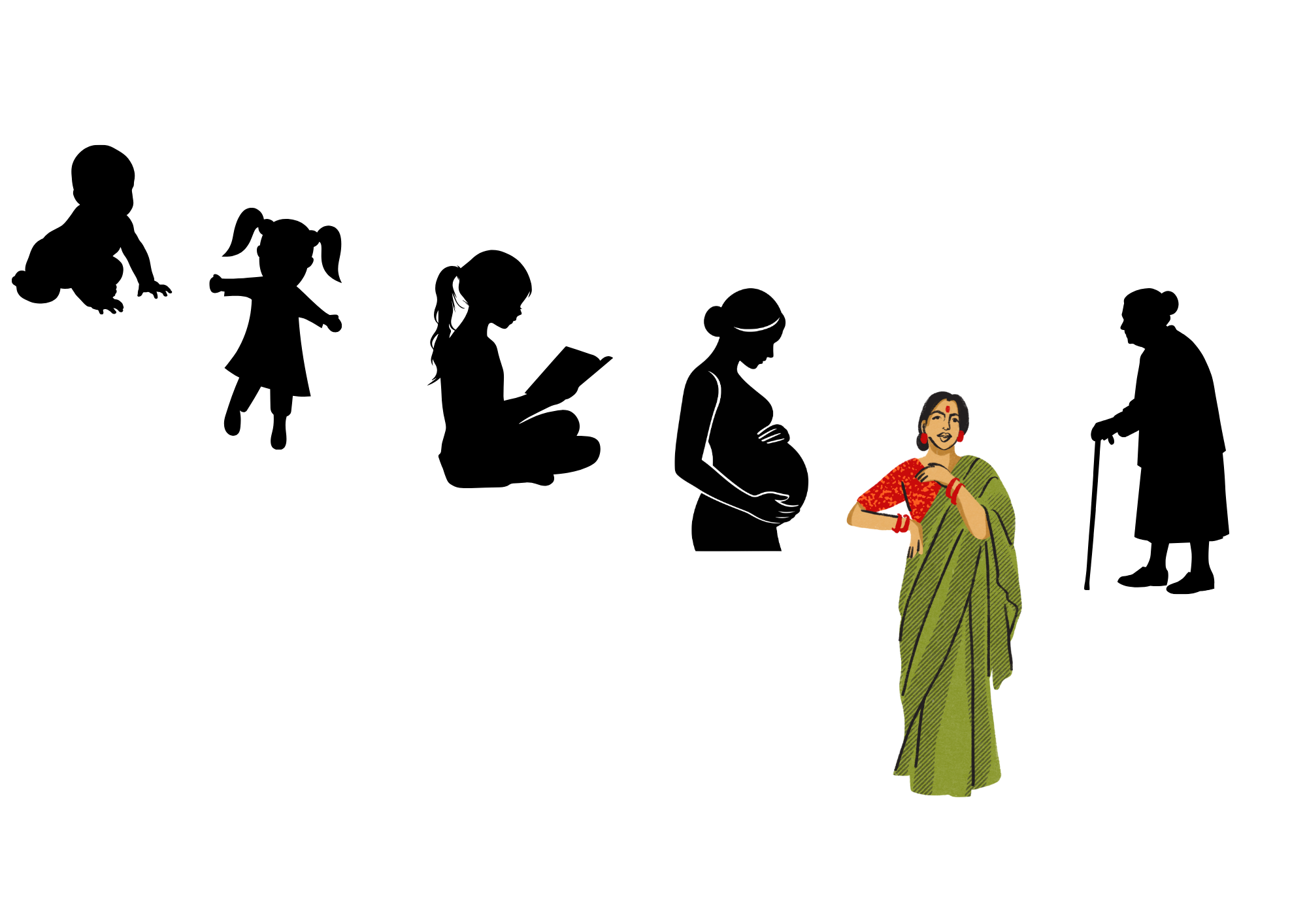 A life-course perspective makes visible what event-based approaches obscure: women’s health needs accumulate, interact, and compound over time. The average childbearing career in India ends by around 27–28 years. Beyond this stage are over 35.3 crore women—nearly 25% of the population— whose health needs fall outside the dominant imagination of women’s health programmes.
Majhdhaar is a collective mission led by PCI India, AIIMS Patna, RMRC Gorakhpur, JEEViKA, and other partners. It seeks to transform women’s wellbeing approaches by addressing the interplay of nation of services, norms shifting, and narrative reconstruction. The mission focuses on enabling women to move from passive recipients of care to informed and empowered decision-makers, while working to reshape the structures that influence their wellbeing and work.
From the Frontlines
Our current work on Norms Shifting utilises a body and health literacy tool, developed iteratively with the women of Jehanabad Sadar, Bihar. Catering to ~25000 women, the participatory engagement is an essential process for the iterative innovation in Majhdhaar. The body literacy tool has evolved from a basic nudge for screening and care seeking to nuanced messages on self-care, hygiene, rest, nutrition, and sexual health. The tool has given space to conversations and questions that reveal underlying processes shaping the lives of women in the Majhdhaar.
In a sample of 451 women, 41% report (diagnosed) non-communicable diseases, 62% report genitourinary symptoms, and 84% report general health issues in the past month. Yet these concerns remain episodic, fragmented, or normalised rather than addressed through sustained attention. The delays range from women are rendered dependent on their husbands—64% relied on their husbands for making health decisions. The neglect is then threefold—it comes from the self, from the spouse and family, and later from services that are not equipped to meet women where they are.
Know us more